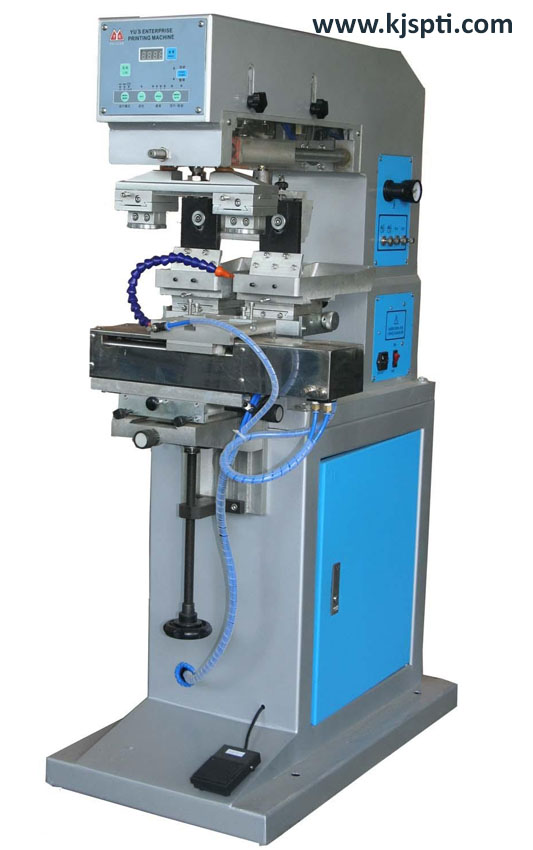
Pad Printing

What is Pad Printing?
- A two dimensional graphic or text is transferred onto a three dimensional part.
- This is achieved through a combination of three major components-printing ink, image plates, and printing pads.
- In addition, printing jobs can be done at much higher speeds using pad printing, with consistent, high quality.
- A process allows graphic printing on otherwise impossible areas and products.
- The advantage of these rubber pads is that they can be custom tailored to meet the requirements of any project.
How Pad Printing is done?
- The image plates contain the specific artwork to be printed etched into their surface.
- The printing ink is held within these etched areas until the rubber printing pads pick up the ink and transfer it onto the part.
- This continuous cycle of the printing pad picking up ink and transferring it onto the substrate continues over and over until the project is completed.
Why Pad Printing?
- Although not as cost effective as silk screening, the pad printing process offers some advantages over silk screening.
- The advantage of these rubber pads is that they can be custom tailored to meet the requirements of any project.
- Pad printing is desirable when working with much larger volume projects, where consistency may be sacrificed by the human hand during silk screening.
- Pad printing is good for printing to 3D objects with difficult shape; the most common example of pad printing is on keyboards.
Applications
Plastics, Entertainment, and Consumer Products:- Plastic Related Products; Consumer, Designed Products, Pens, Lighters
- Logos and Diaries Front plates, Bottles, Stamp mounts
- Promotional products and Industrial printings

Contact Us
KJ SPRINGS & PLASTICS TECHNOLOGY, INC.
Phase II, Blk 2 Lot 13-14 Calamba Premier International Park, Special Economic Zone Brgy. Batino, Calamba City,
Laguna Philippines 4027
: +(6349) 530-0314
: sales@kjspti.com
SEJONG TECH., CO. LTD.
525-2 Gajwa Dong SEO-KU
Incheon City, Korea 404-250
: (82-32) 574-0783